The work behind the perspective
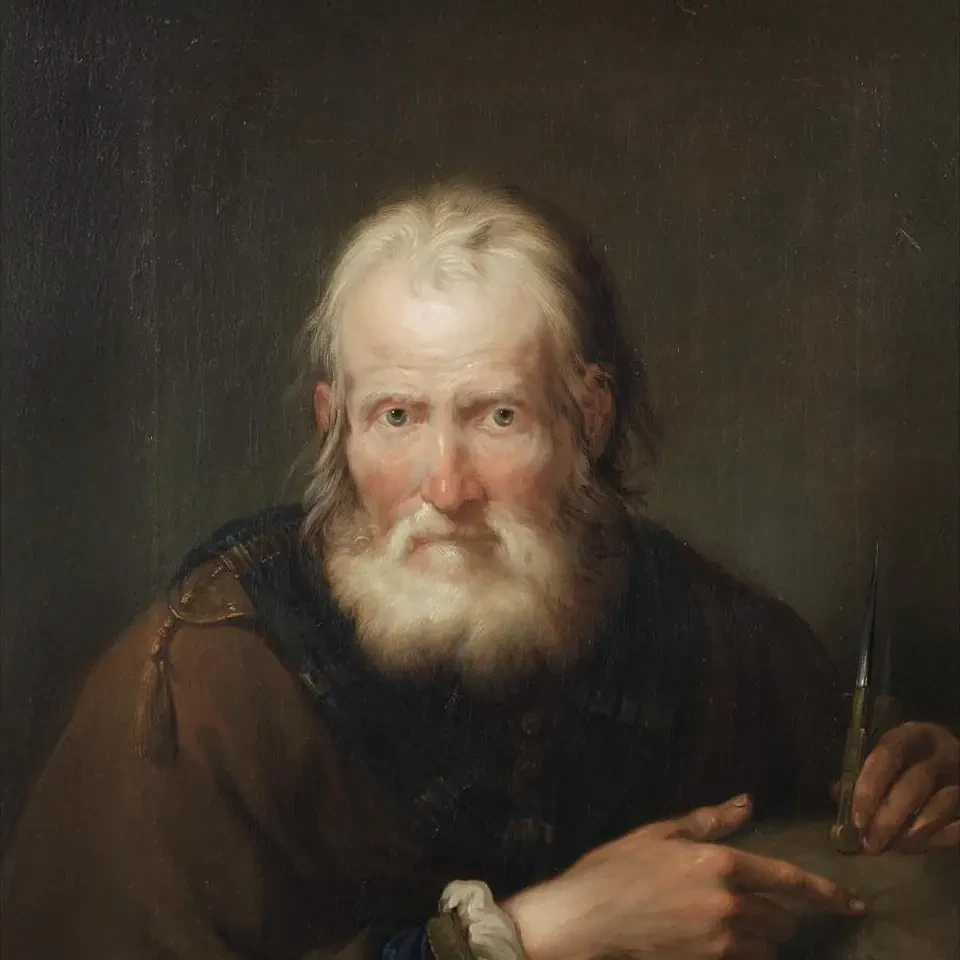
Ada Lovelace
First Computer Programmer, Visionary Mathematician
- Visionary Thinking
- Mathematical Abstraction
- Algorithm Design
- Technical Translation and Synthesis
- Interdisciplinary Integration
- Systems Thinking
About Ada Lovelace
Ada Lovelace - Biography
Ada Lovelace, daughter of poet Lord Byron, was an English mathematician who collaborated with Charles Babbage on his Analytical Engine, creating the first published computer algorithm in 1843 and envisioning computing's potential beyond calculation. Educated rigorously in mathematics despite frequent illnesses, she married William King in 1835, becoming Countess of Lovelace upon his elevation to earl.
Augusta Ada Byron was born on December 10, 1815, in London, as the only legitimate child of poet Lord George Gordon Byron and Anne Isabella Milbanke (Lady Byron), a mathematician nicknamed the 'Princess of Parallelograms.' Her parents separated a month after her birth amid scandal, and Lord Byron left England, dying in Greece when Ada was eight; she never met him but was influenced by his legacy. Raised by her mother, Ada received private tutoring in mathematics and logic to counter her father's poetic tendencies, studying under experts like Augustus De Morgan; despite chronic illnesses including respiratory and digestive issues, she pursued self-education and showed early mathematical talent. In 1833, at a demonstration of Charles Babbage's Difference Engine, Ada met the inventor, beginning a lifelong collaboration. She married William King, 8th Baron King, on July 8, 1835, at age 19; he became Earl of Lovelace in 1838, granting her the title Countess of Lovelace. The couple had three children, and she socialized with figures like Charles Dickens and Michael Faraday, though health problems persisted, including recovery delays after childbirth and rheumatic attacks. Ada's seminal work came in 1842–1843 when she translated Luigi Menabrea's article on Babbage's Analytical Engine from French into English, appending extensive original notes tripling its length. These notes included 'Note G,' the first algorithm for the engine (computing Bernoulli numbers), recognized as the world's first computer program. She foresaw the machine's applications in music, graphics, and symbolic manipulation, calling it capable of 'weaving algebraic patterns' like a loom. Her health declined sharply after 1843; diagnosed with uterine cancer in her mid-30s, she endured bloodletting and other era treatments before dying on November 27, 1852—the same age as her father. Under her mother's influence, she underwent a religious transformation, confessed something unknown to her husband (prompting his withdrawal), and requested burial beside Lord Byron at the Church of St. Mary Magdalene, Hucknall, Nottinghamshire. Her contributions faded into obscurity until the 20th century, later inspiring Ada Lovelace Day (second Tuesday in October) honoring women in STEM.
Learn from Ada when you're...
- Anticipating Future Technology Impact
- Bridging Technical and Creative Domains
- Recognizing Untapped Potential
- Translating Complex Ideas
- Building Foundational Frameworks
- Balancing Optimism with Realism
- Systems-Level Problem Definition
- Establishing Intellectual Credibility
What can you ask about Ada Lovelace's work?
In Get Mentors, Ada Lovelace can hold one of the five seats on your Chat board. Ask Ada's seat or the whole board a question and receive perspectives grounded in published work, with every answer cited. Separately, one idea arrives each morning from mentors selected for your focus.
Best for these goals
- ✓Visionary Thinking
- ✓Mathematical Abstraction
- ✓Algorithm Design
- ✓Technical Translation And Synthesis
Core frameworks
- •Integrate Poetical Science with Mathematical Precision - Unite imagination and logic as complementary tools for understanding reality
- •Religion Is Science, and Science Is Religion - Recognize the spiritual dimension inherent in intellectual inquiry
- •Claim Your Singular Combination of Qualities - Recognize that your unique mix of strengths makes you distinctly suited for specific work
- •Visionary Thinking
Sample questions
- “Which Ada framework applies to my current goal?”
- “What would Ada's published work suggest I consider?”
- “How does this Ada idea apply to my situation?”
- “What blind spot would this mentor framework help me notice?”
Ask about Ada's published frameworks, pressure-test a decision, or put the question to your whole board and see where the seats disagree.
Similar Mentors
More mentors like Ada Lovelace


Give Ada Lovelace a seat on your board
Ask this Chat board seat about Ada Lovelace's published work. Daily Ideas are selected separately for your focus. 7-day free trial on the annual plan, or $19.99/month.
Take your seat