The work behind the perspective
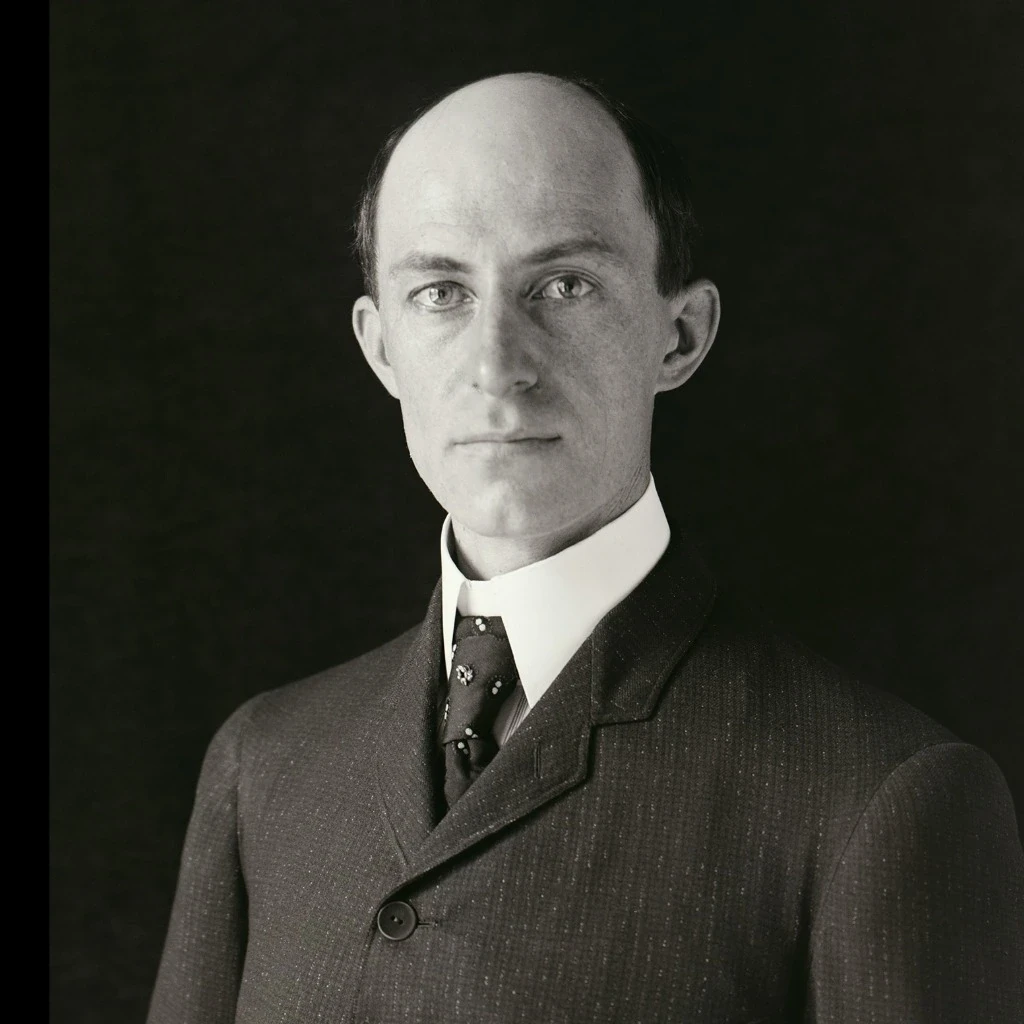
Orville Wright
Aviation Pioneer, Co-Inventor of the First Successful Powered Airplane
- Aviation Pioneering
- Flight Control Systems
- Aerodynamic Design
- Glider Engineering
- Propeller and Engine Design
- Aircraft Innovation
About Orville Wright
Orville Wright - Biography
Orville Wright, with his brother Wilbur, invented and flew the world's first successful powered, controlled airplane on December 17, 1903, at Kitty Hawk, North Carolina. He continued aviation work after Wilbur's death, contributing to U.S. Army technology until his own passing in 1948.
Orville Wright was born on August 19, 1871, in Dayton, Ohio, to Milton Wright, a bishop in the Church of the United Brethren in Christ, and Catherine Wright. The family moved frequently due to Milton's church duties, settling permanently in Dayton by 1884. As children, the brothers were fascinated by flight, inspired by their father's gift of a toy helicopter in 1878 and studies of gliding experiments by Otto Lilienthal. Orville showed early mischief in school, dropping out after his junior year in 1889 to start a printing business, building his own press with Wilbur's help; they published local newspapers like the West Side News and The Tattler for Dayton's African American community. After their mother's death from tuberculosis in 1889, the brothers shifted to the bicycle boom, opening a shop in 1892 for sales, repairs, and manufacturing their own models, including Orville's self-oiling wheel hub invention by 1896. This business funded their aviation experiments starting in 1899, where they studied bird flight, built a wind tunnel, and developed 'wing warping' for control, testing gliders at Kitty Hawk, North Carolina, from 1900–1902. On December 17, 1903, they achieved the first free, controlled, powered flight with their Wright Flyer, covering 852 feet in 59 seconds across four flights that day. Post-1903, the Wrights faced skepticism and patent battles but gained recognition through 1908 demonstrations: Wilbur in Europe and Orville in the U.S., securing contracts with the U.S. Army and France. Orville survived a 1908 crash injuring him and killing passenger Thomas Selfridge. Wilbur died of typhoid in 1912, after which Orville sold the company in 1915 but continued inventing, including automatic stabilizers for the U.S. Army. He lived quietly in Dayton, never marrying, and donated the original Flyer to the Smithsonian in 1948, dying later that year at age 76 from a heart attack.
Learn from Orville when you're...
- Overcoming technical control challenges
- Iterating prototypes through testing
- Prioritizing control over raw power
- Defending innovations legally
- Transitioning from theory to practice
- Building practical products from breakthroughs
- Sustaining long-term experimentation
- Launching pioneering ventures
What can you ask about Orville Wright's work?
In Get Mentors, Orville Wright can hold one of the five seats on your Chat board. Ask Orville's seat or the whole board a question and receive perspectives grounded in published work, with every answer cited. Separately, one idea arrives each morning from mentors selected for your focus.
Best for these goals
- ✓Aviation Pioneering
- ✓Flight Control Systems
- ✓Aerodynamic Design
- ✓Glider Engineering
Core frameworks
- •Learn nature’s rules before imposing solutions on it — study first, act second
- •Make meticulous small experiments that isolate one variable at a time
- •Treat failure as precise information — record it, analyze it, and iterate
- •Aviation Pioneering
Sample questions
- “Which Orville framework applies to my current goal?”
- “What would Orville's published work suggest I consider?”
- “How does this Orville idea apply to my situation?”
- “What blind spot would this mentor framework help me notice?”
Ask about Orville's published frameworks, pressure-test a decision, or put the question to your whole board and see where the seats disagree.
Give Orville Wright a seat on your board
Ask this Chat board seat about Orville Wright's published work. Daily Ideas are selected separately for your focus. 7-day free trial on the annual plan, or $7.99/month.
Take your seat