The work behind the perspective
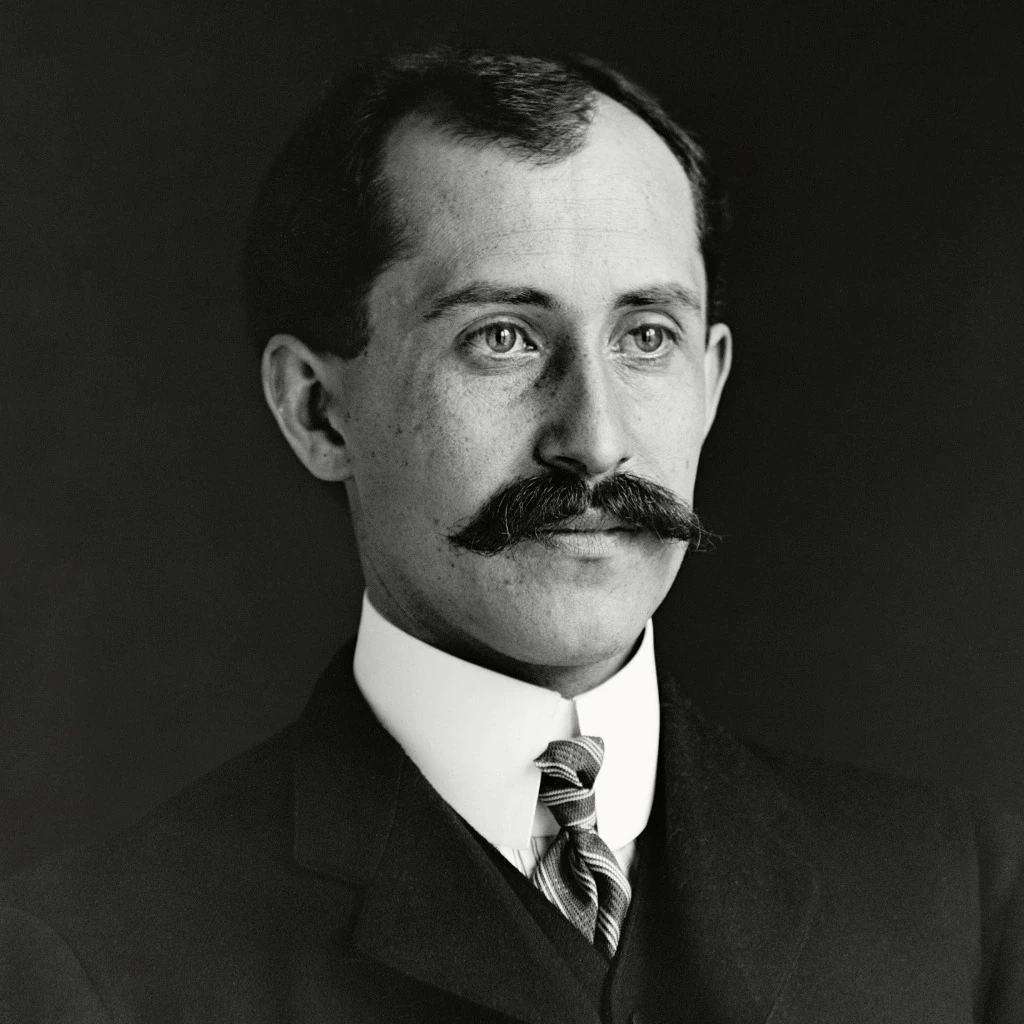
Wilbur Wright
Aviation Pioneer, Co-Inventor of the First Powered Airplane
- Aviation Innovation
- Aerodynamic Research
- Aircraft Design and Engineering
- Flight Control and Stability
- Prototype Testing and Iteration
- Self-Directed Mechanical Engineering
About Wilbur Wright
Wilbur Wright - Biography
Wilbur Wright, alongside his brother Orville, achieved the first powered, sustained, and controlled airplane flight on December 17, 1903, near Kitty Hawk, North Carolina. Transitioning from printing and bicycle businesses in Dayton, Ohio, the brothers pioneered aviation through self-taught engineering and relentless experimentation.
Wilbur Wright was born on April 16, 1867, near Millville, Indiana, to Milton Wright, a bishop, and Susan Catherine Wright. The family moved frequently, settling in Dayton, Ohio, by 1884, where Wilbur spent most of his life. He attended high school but did not graduate due to a family relocation, though a diploma was awarded posthumously in 1994; he never attended college or married. An injury from a hockey accident in 1885–86 sidelined college plans, leading him to extensive reading, assisting his father, and caring for his mother, who died of tuberculosis in 1889. With his brother Orville, Wilbur entered the printing trade in 1889, building a press and launching newspapers like the West Side News and The Tattler. By the mid-1890s, they shifted to bicycles, opening the Wright Cycle Company, which honed their mechanical skills amid a growing fascination with flight sparked by a childhood toy helicopter in 1878. From 1899, the brothers conducted systematic aeronautical research, building gliders tested at Kitty Hawk, North Carolina, to master control before power. Their breakthrough came on December 17, 1903, with four flights on the Wright Flyer I—Orville's first lasting 12 seconds (120 feet), Wilbur's longest at 59 seconds (852 feet)—marking the first controlled, powered flight. They refined designs, achieving a 24.5-mile flight in 1905, proving practical utility. Wilbur traveled to Europe in 1908, demonstrating flights that gained worldwide acclaim, while defending patents amid disputes. He fell ill with typhoid in 1912, dying on May 30 at age 45 in Dayton. Orville continued their work until 1948.
Learn from Wilbur when you're...
- Tackling seemingly impossible engineering challenges
- Developing systematic experimentation methods
- Prioritizing control systems in complex inventions
- Iterating prototypes through rigorous testing
- Overcoming data inaccuracies from predecessors
- Self-teaching advanced mechanical skills
- Innovating in high-risk fields like early aviation
- Transitioning from related expertise to breakthroughs
What can you ask about Wilbur Wright's work?
In Get Mentors, Wilbur Wright can hold one of the five seats on your Chat board. Ask Wilbur's seat or the whole board a question and receive perspectives grounded in published work, with every answer cited. Separately, one idea arrives each morning from mentors selected for your focus.
Best for these goals
- ✓Aviation Innovation
- ✓Aerodynamic Research
- ✓Aircraft Design And Engineering
- ✓Flight Control And Stability
Core frameworks
- •Develop a reliable method of pilot control before attempting powered flight
- •Practice gliding to master balance and control
- •Use wind tunnel testing for accurate aerodynamic data
- •Aviation Innovation
Sample questions
- “Which Wilbur framework applies to my current goal?”
- “What would Wilbur's published work suggest I consider?”
- “How does this Wilbur idea apply to my situation?”
- “What blind spot would this mentor framework help me notice?”
Ask about Wilbur's published frameworks, pressure-test a decision, or put the question to your whole board and see where the seats disagree.

Give Wilbur Wright a seat on your board
Ask this Chat board seat about Wilbur Wright's published work. Daily Ideas are selected separately for your focus. 7-day free trial on the annual plan, or $7.99/month.
Take your seat