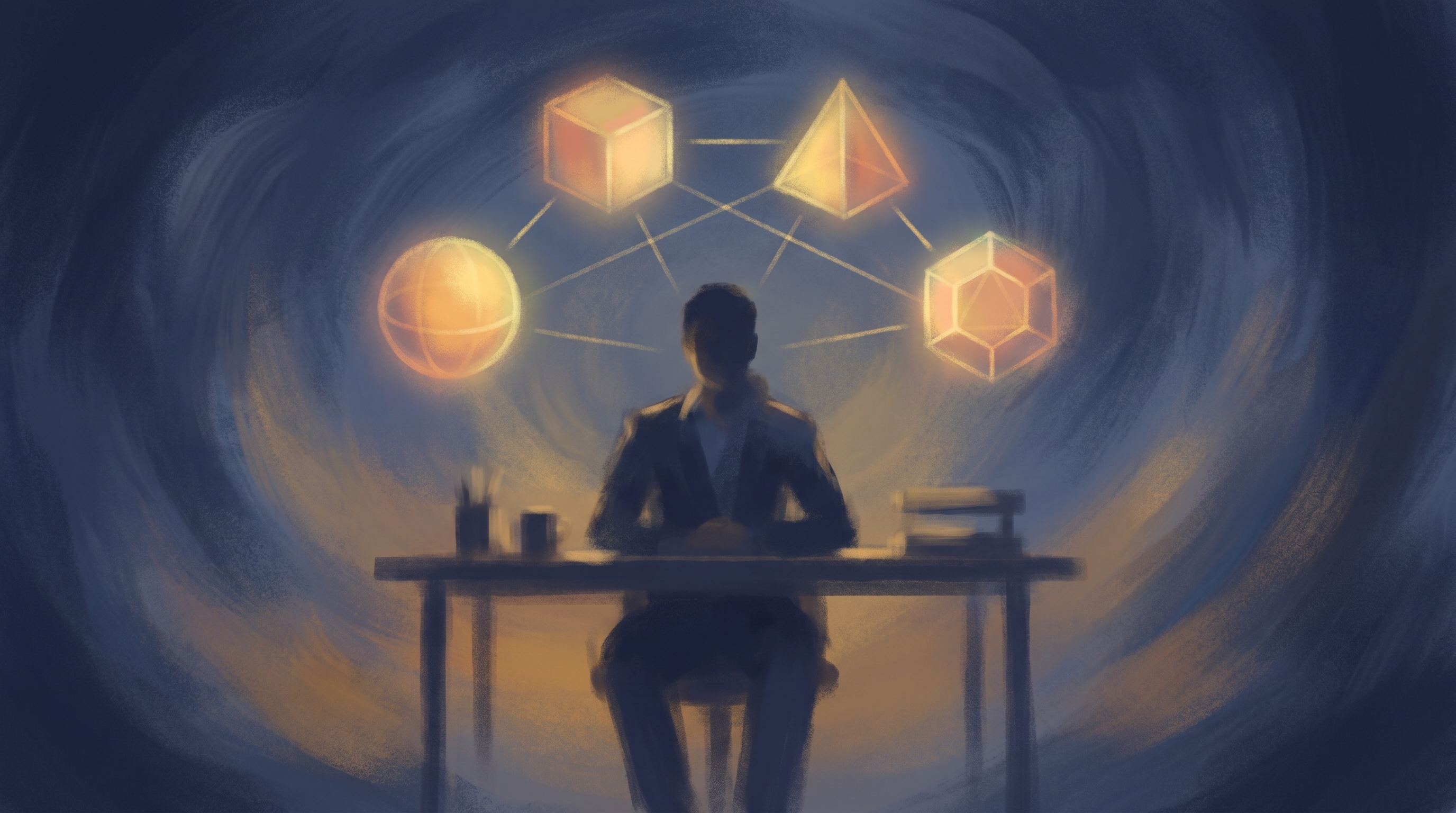
AI mentorship is real. It's also often misunderstood.
Some people think it's just ChatGPT with a persona. Some think it's going to replace human mentors entirely. Most are somewhere in between, unsure what it actually does.
This guide covers what AI mentorship is, how it works, what it's genuinely good for, and what to watch out for.
What Is AI Mentorship?
AI mentorship is guidance delivered by an AI system grounded in the published work of a specific mentor — a real person whose books, talks, interviews, and essays give the AI a concrete body of thinking to synthesize from.
The key distinction from a generic AI chatbot: the source material and the attribution. A good AI mentor doesn't just respond as "a helpful assistant." It synthesizes what Naval Ravikant, or Alex Hormozi, or Sara Blakely have actually published — their specific frameworks, their specific philosophy — and labels the result as AI synthesis, never writing in the mentor's voice.
When you ask an AI mentor "how should I think about this decision?" you get an answer grounded in what that person has actually published about decisions. That's different from what you'd get from ChatGPT.
How Does AI Mentorship Actually Work?
The best AI mentorship platforms ground every answer in authentic primary sources: books, speeches, interviews, essays, and other original content from the mentor. Not summaries. Not Wikipedia. The original thinking — with each position citing the specific book, letter, talk, or interview it came from.
When you interact with the AI, it draws on that published record to respond consistently with the mentor's actual frameworks. Ask about wealth creation with Naval on your board and you'll get his specific model about specific knowledge and leverage, not a generic answer about making money.
The interaction is conversational. You describe your situation, ask a question, and receive a response that's shaped by both your context and the mentor's philosophy.
What happens next — in the best implementations — is up to you. Answering back is optional, and what you say shapes what arrives tomorrow. Reading alone is enough.
What AI Mentorship Is Good For
Multiple perspectives quickly. Human mentors give you one point of view. AI mentorship platforms let you ask Naval, Hormozi, and Blakely the same question and compare their responses. That range of perspective is not accessible any other way.
Immediate access. The question hits you during a commute, at 11pm before a difficult conversation, in the middle of a decision. An AI mentor is there. A human mentor is not.
Broad domain coverage. Leadership, business, fitness, creativity, career change, investing, communication — most human mentors specialize in one area. AI mentorship platforms cover all of them.
A sustainable daily rhythm. The best AI mentorship platforms don't just answer questions. They send one idea each morning — about 90 seconds of reading — and show you where mentors agree and disagree on how it applies to you, with no streaks and nothing to complete.
Affordable access. According to MentorcliQ, 76% of professionals say mentors are important to their success. Only 37% have one. The primary barrier is cost. AI mentorship at $19.99/month removes that barrier.
What AI Mentorship Is Not Good For
Network introductions. A real mentor in your field can introduce you to investors, hiring managers, and collaborators. AI cannot.
Deep accountability. Knowing that a real human will ask "did you do the thing?" changes behavior in a way that AI accountability does not fully replicate.
Highly specific technical domains. If you need someone who's navigated the specific regulatory environment of your fintech startup in your country, you need a human who's done that.
Emotional support. AI mentors can provide perspective and frameworks. They're not therapists.
The Research Behind AI Mentorship
A 2024 Conference Board study found that AI now handles roughly 90% of career coaching functions effectively. The remaining 10% — network access, deep human connection, highly specialized advice — is where human mentors still have a meaningful edge.
A separate study from Sun Microsystems found that employees with mentors were promoted five times more often than those without. That's the baseline. AI mentorship makes that accessible to everyone, not just the well-connected.
Which AI Mentorship Apps Are Worth Using?
Get Mentors is the most developed consumer AI mentorship platform. 441 mentors across business, leadership, fitness, creativity, and career development. A daily idea, a board of five mentors, opposing positions with citations, questions to one mentor or the whole board. 7-day free trial, then $19.99/month. 5.0 stars on App Store.
Purpose is another option — focuses on life alignment and goal clarity. More coaching-oriented than mentorship-specific.
Rocky.ai offers white-label AI coaching — more commonly used by companies than individuals.
How to Get the Most From AI Mentorship
Choose mentors with relevant expertise. Don't just pick the most famous names. Choose mentors whose thinking directly applies to your current challenges.
Bring specific situations, not vague questions. "How should I think about my career?" gets a generic answer. "I've been offered a senior role at a smaller company vs. staying at a larger one — here's my situation" gets a useful one.
Follow through on what resonates. AI mentorship produces value when you act on what you learn. Treat it like a real mentorship relationship — show up prepared and do the work.
Use it consistently. Occasional use produces occasional insight. Regular use builds a compounding understanding of how your mentors think and how to apply their frameworks to new situations.
FAQ
Is AI mentorship real mentorship? It depends on what you mean by mentorship. If you mean guidance, perspective, and structured support toward goals — yes, AI mentorship delivers this. If you mean a human relationship with network access and personal accountability — that's something different.
Is AI mentorship just ChatGPT with a persona? No. The quality of the underlying source material and the discipline of the attribution matter enormously. A well-built AI mentor synthesizes the actual published frameworks and philosophy of that person — labelled as AI synthesis, not written in their voice. That's different from prompting a generic LLM.
How much does AI mentorship cost? The main platforms typically run under $20/month — Get Mentors is a 7-day free trial, then $19.99/month. Human mentorship on platforms like MentorCruise costs $50-400/month.
Can I use AI mentorship and a human mentor at the same time? Yes, and this is often the best approach. Use AI mentorship for broad access, multiple perspectives, and immediate guidance. Use a human mentor for deep relationship-building in a specific domain where network access matters.
Ask a board of people like these.
Pick 3 to 5 people from about 195, including Naval Ravikant, Alex Hormozi, and Mark Cuban. Ask about a decision and see what each has said about it, with sources. Your first 5 questions are free. iPhone.